
🧱 Farmhouse Repointing — Marsh Gibbon
Non‑Hydraulic Lime Putty Repointing for a Traditional Oxfordshire Farmhouse
Project Overview
This project involved the full repointing of a traditional farmhouse in Marsh Gibbon using pure non‑hydraulic lime putty mortar. The building had been previously patched with hard cement, which was trapping moisture and causing deterioration to the original brickwork. The goal was to remove all inappropriate materials and restore the property using correct conservation methods that allow the building to breathe naturally.
This farmhouse is a perfect example of why lime putty is essential for older masonry: it protects the structure, prevents moisture retention, and delivers a clean, authentic finish that suits the age and character of the property.

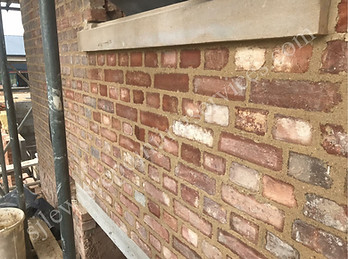
Scope of Work
- Careful removal of failing and inappropriate cement mortar
- Full repointing using non‑hydraulic lime putty
- Traditional hand‑tooled finish
- Joint depth correction for long‑term durability
- Protection of surrounding brickwork and features
- Final clean‑down with no staining or smearing
Condition Before Work
Before repointing, the farmhouse showed several issues typical of older rural properties:
- Cement patches restricting breathability
- Open, recessed, and weathered joints
- Damp retention in shaded elevations
- Mortar loss around window reveals and corners
- Early signs of brick face deterioration
If left untreated, the cement would have continued to trap moisture, leading to spalling, frost damage, and internal damp
Our Conservation Approach
1. Hand Rake‑Out Only
All defective mortar was removed by hand, ensuring no damage to the historic brick arrises.
No grinders were used on the face of the building.
2. Pure Lime Putty Mortar
A non‑hydraulic lime putty mortar was selected because it:
- Allows full breathability
- Moves with the building
- Is compatible with historic brickwork
- Provides a softer, more traditional finish
This is the correct material for a farmhouse of this age.


3. Traditional Application
The mortar was applied in controlled lifts, compacted fully into the joints, and finished by hand to create a clean, heritage‑appropriate appearance.
4. Clean, Controlled Workmanship
Throughout the project, brick faces were kept spotless.
This is what gives the finished farmhouse its crisp, premium look.
Results
The farmhouse now benefits from:
- A fully breathable envelope
- Mortar that matches the building’s age and character
- Strong, durable joints that protect the masonry
- A clean, consistent finish across all elevations
- Removal of all damaging cement repairs
The transformation is both visual and structural — the building now performs as it was originally intended.
Why This Project Matters
This case study demonstrates:
- Correct use of non‑hydraulic lime putty
- Sensitivity to historic materials
- Clean, conservation‑grade workmanship
- The ability to restore a farmhouse without altering its character
It’s a strong example of the specialist heritage repointing work you deliver across Oxfordshire and surrounding counties.